Stickers

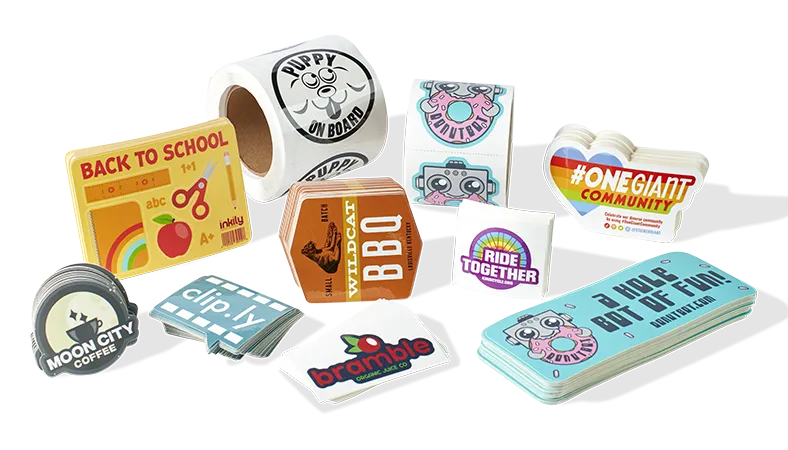
An adhesive (or sticker, from the English word “to stick”-paste) is a text or image which has on its lower side a thin layer of adhesive to secure it on a surface, usually as definitive. The word sticker represents both the sticker itself and the fact of pasting the sticker.

The support is made of paper or vinyl. The message is usually printed or pasted but it can also be drawn by hand in small-scale productions.

The adhesive side is normally covered by a protective (transporting paper) while the sticker isn’t collocated. Some stickers do not use glue, but are designed to be applied on very smooth surfaces (glass, ceramic, etc.) by electrostatic effect. In this case they can be repositioned or removed without damaging the surface where they are applied on.


There are three main types of stickers:


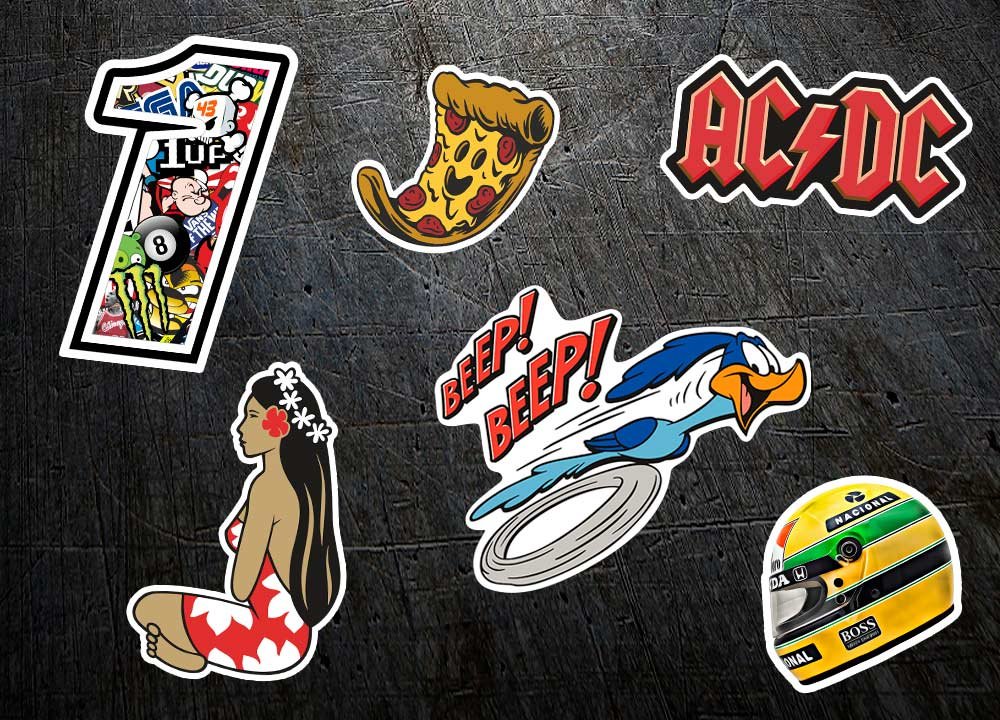
Advertising stickers: they serve to show brands, logos, slogans or advertising policies. Most are mass-produced by advertisers and political parties, but some are produced in small series of stickers like music groups to convey their name.
The political or militant stickers demand a position or message. They represent a counter-culture and tend to be pasted on the same "advertising" they denounce. They are presented as a way to reclaim the space in general and advertising in particular.
The artistic stickers: there are a lot of them, they are converted from a blank sticker to a small piece of art, from tag to drawing.

History

The beginning of the sticker appears shortly after the development of effective and cheap adhesives, in the late 1960's. It takes quickly the place of the decals, and becomes widely used in the years 1970 to 1990 as an advertising object. The number and variety of advertising stickers produced with this name have made it an object of collection easily accessible (because they were cheap) and widespread.

In 1979, the Act of 29 December prohibits affixing stickers outside permitted areas; in parallel, the second oil crisis and the economic conjecture that ensues made the advertisers to prefer other media communication ways. The sticker, however, remains a medium for the advertising spot. To clear their liability in case of wrong use, advertisers add most of the time on stickers the statement "to stick only where it is allowed, according to the law of December 29, 1979."

The militant and artistic stickers (the objects and practice) become at the beginning of the 1980 an alternative communication channel, and a growing phenomenon after the 1990's: the relative low cost of production and the ease of the stickers to be pasted no matter where, are two explanations of the practice often referred to as “wild”.

www.stickersshop.com